How to Check Tire Pressure and Rotate Your Own Tires
Tires are the single most safety-critical component on any vehicle — the four contact patches connecting a two-ton vehicle to the road at highway speed — and they are among the most neglected components in typical American vehicle maintenance. The two tire maintenance practices with the highest return on safety and cost are both achievable in a driveway in less than an hour: checking and correcting tire pressure monthly, and rotating tires every 5,000 to 7,500 miles.
Tire Pressure: The Most Important Number in Your Glove Box
The correct tire pressure for your vehicle is printed on a sticker in the driver’s door jamb — not on the tire sidewall, which shows the tire’s maximum pressure, not the correct operating pressure for your specific vehicle. These two numbers are frequently different and using the tire sidewall number overinflates tires significantly. Check pressure when the tires are cold — the morning before driving produces the most accurate reading since heat from driving increases pressure by several PSI and masks underinflation. A quality digital tire gauge costs $10 and provides readings accurate to 0.5 PSI. The standard stem valve cap gauge is inaccurate and not worth using for anything beyond an approximate check.
Why Tire Rotation Matters
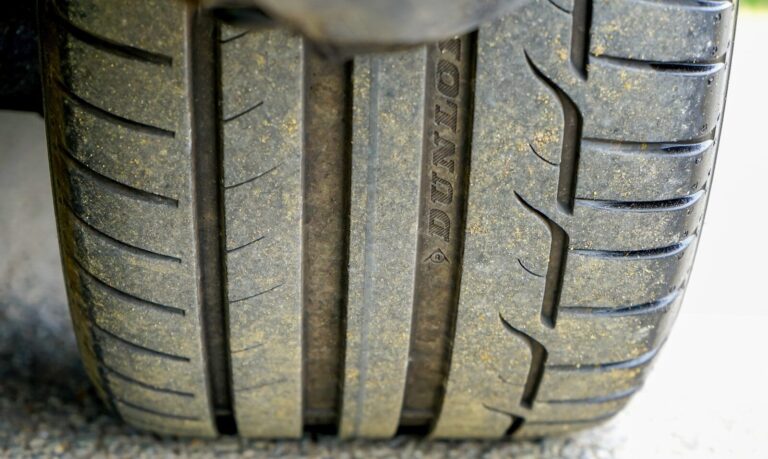
Front and rear tires wear at different rates due to different loads (the engine’s weight over the front axle), different functions (front tires steer and brake more aggressively), and different alignment angles. Without rotation, front tires wear two to three times faster than rear tires on most front-wheel-drive vehicles, producing uneven wear that requires early replacement. Regular rotation distributes wear evenly across all four tires, extending the set life by 20,000 to 30,000 miles on a typical passenger vehicle — representing a $600 to $800 value at replacement costs.
Rotation Patterns
The most common rotation pattern for non-directional tires on front-wheel-drive vehicles is the forward cross: front tires move straight to the rear; rear tires cross to the front (left rear to right front, right rear to left front). For rear-wheel-drive vehicles, use the rearward cross: rear tires move straight to the front; front tires cross to the rear. Directional tires — which have tread patterns designed to rotate in one direction — can only be rotated front to rear on the same side and cannot be crossed.