How to Tint Car Windows: What You Can Do Yourself and What Requires a Professional
Automotive window tinting serves functional purposes — reducing solar heat gain that increases AC load, blocking UV radiation that damages skin and degrades interior materials, and reducing glare that contributes to driver fatigue on long trips — in addition to the aesthetic improvement that makes tinted vehicles look more finished. Professional window tinting installation costs $150 to $500 for a full vehicle depending on film quality and vehicle size. DIY tinting film is available for $30 to $80 for a full kit, and the installation is achievable for patient, detail-oriented homeowners willing to accept that the first attempt will be imperfect.
Legal Requirements First
Window tint darkness is regulated by state law in all 50 states, with significant variation in what is legally permissible. Most states regulate tint darkness as Visible Light Transmission (VLT) percentage — the percentage of light allowed through the film. A 5 percent VLT film (very dark, almost opaque) is illegal on front side windows in most states. Front side windows typically require 35 to 70 percent VLT or higher depending on state. Rear windows and rear side windows generally allow darker tint. Research your state’s specific regulations before purchasing film — installing illegal tint produces both a fix-it citation and the cost of removal and replacement.
The DIY Process
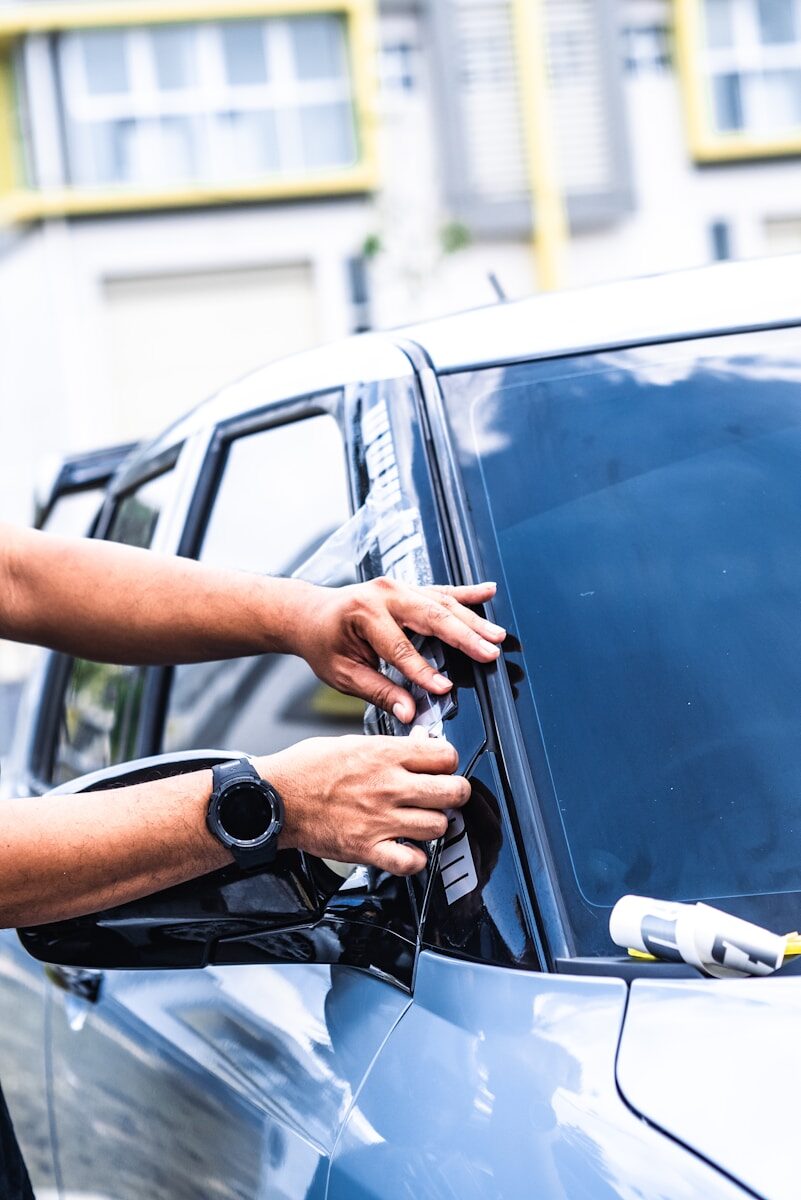
Clean the window interior with a soap and water solution and a squeegee to remove any debris that would create bubbles under the film. Cut the film slightly larger than the window using the outside of the glass as a template. Peel the film liner and use the slip solution (soapy water) to allow the adhesive side to be positioned on the window before it adheres. Squeegee from the center outward to remove air bubbles and excess water. Use a heat gun along the edges to activate the adhesive and conform the film to curved windows. Trim the excess with a utility knife against the window seal. The hardest windows to tint — rear defroster windows with their horizontal lines and curved shapes — are consistently the best candidates for professional installation even if front windows are done DIY.