The Complete Car Fluid Check Guide: What to Check, When, and What to Look For
A vehicle’s fluid systems are the circulatory, cooling, hydraulic, and lubricating infrastructure that keeps every major mechanical system functional. Neglecting fluid levels and condition produces the cascade of increasingly expensive failures that characterize vehicles that have been poorly maintained over their lifespans. Fifteen minutes at every oil change interval — or at minimum every two to three months — spent checking every fluid level and condition provides the information needed to address developing problems before they become expensive ones.
Engine Oil: Monthly
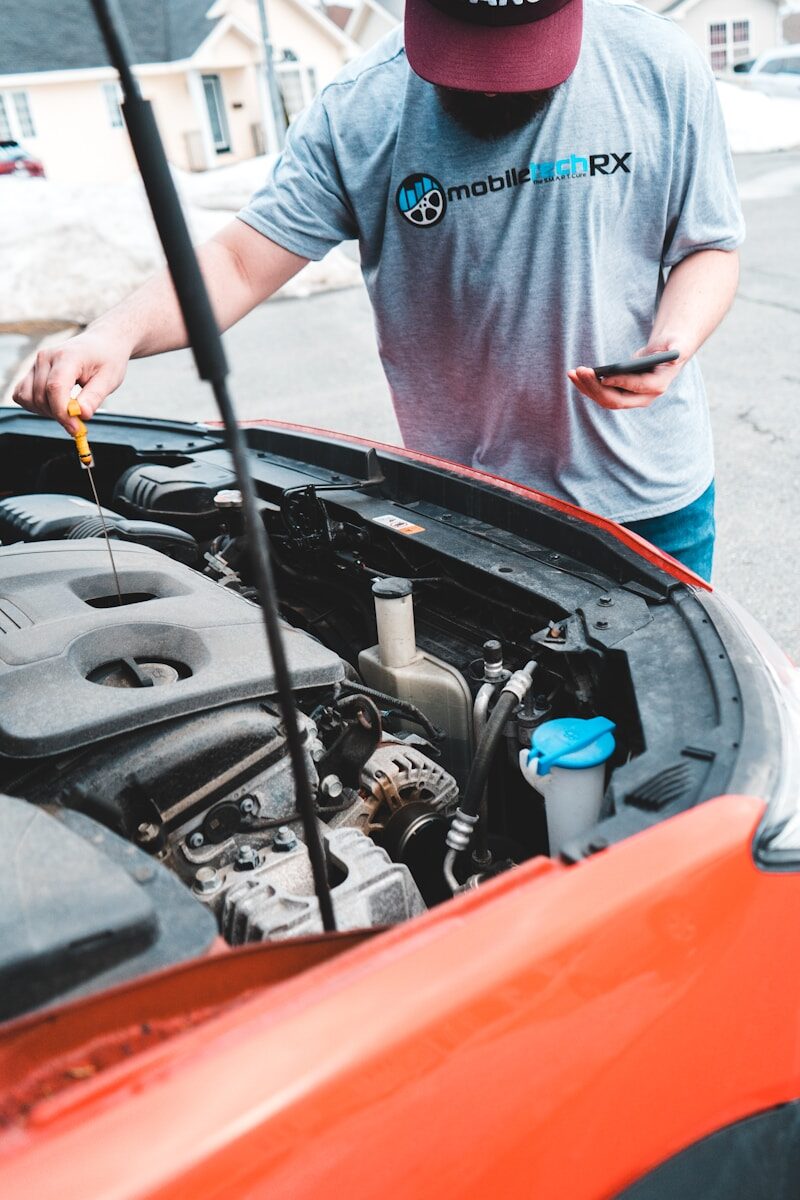
With the engine off and level, pull the dipstick, wipe clean, reinsert fully, and withdraw to read the level. The oil should be between the MIN and MAX marks. Note the color and consistency — fresh oil is amber and translucent; aged oil darkens and becomes opaque. Milky or frothy oil indicates coolant contamination from a head gasket failure requiring immediate professional attention. Check level monthly and top off as needed with the correct viscosity — do not overfill above the MAX mark.
Coolant, Brake Fluid, and Power Steering
Coolant level is visible in the translucent reservoir without opening anything. Check that it’s between MIN and MAX with the engine cold. Brake fluid in the master cylinder reservoir should be at or near the FULL mark — significantly low brake fluid typically indicates either a leak in the system or worn brake pads (as pads wear, the caliper pistons extend further and the fluid level in the reservoir drops correspondingly). Power steering fluid, if the vehicle has a hydraulic system rather than electric power steering, is checked via a small reservoir with a dipstick typically near the firewall on the driver’s side. Low power steering fluid indicates a leak that should be inspected.