How to Check Coolant and Flush Your Radiator: Preventing the Most Expensive Engine Failure
Engine overheating is one of the most expensive automotive failures — a single overheating event that warps a cylinder head or causes head gasket failure produces repair bills of $1,500 to $4,000 on most passenger vehicles. The primary preventable cause of overheating is cooling system neglect: coolant that is too diluted, too acidic, or too degraded to prevent corrosion and maintain the freeze and boil protection that the cooling system requires. Checking coolant condition and flushing and refilling the system at the manufacturer’s recommended interval costs about $30 in materials and ninety minutes of work.
Checking Coolant Condition
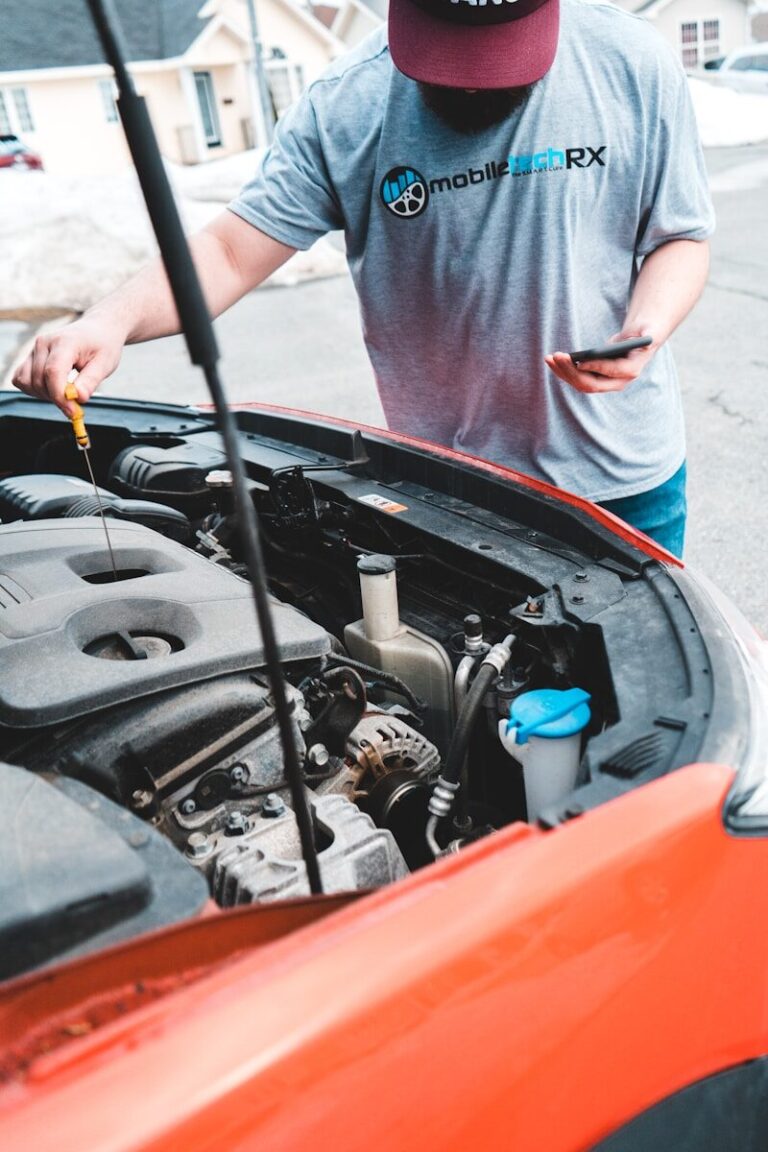
Check coolant level in the translucent coolant reservoir when the engine is cold — never open the radiator cap on a hot engine, as the cooling system is pressurized and scalding coolant will spray out under pressure. The level should be between the MIN and MAX lines on the reservoir. Test the coolant condition with an inexpensive coolant test strip — available for $5 to $10 at auto parts stores — which measures freeze protection temperature, pH (acidity level), and inhibitor depletion. Green coolant (conventional) should be replaced every two years or 30,000 miles. Orange, pink, or yellow long-life coolants (OAT and HOAT formulations) last five years or 150,000 miles. Never mix coolant types — this creates a chemical reaction that produces sludge and reduces cooling system performance.
Performing a Coolant Flush
Allow the engine to cool completely before beginning. Place a drain pan under the radiator drain petcock — a small valve or plug at the bottom of the radiator. Open the petcock and allow the coolant to drain completely. Close the petcock. Fill the system with distilled water and run the engine to operating temperature, then drain again to dilute remaining old coolant. Refill with the correct coolant type and concentration — typically a 50/50 premix or a 50/50 combination of full-strength coolant and distilled water, which provides freeze protection to approximately minus 34 degrees Fahrenheit.