How to Replace a Car Battery Yourself: A 15-Minute Job With No Tools Beyond a Wrench
A car battery replacement is among the simplest automotive DIY tasks — it involves disconnecting two cables, removing one hold-down bracket, lifting out the old battery, and reversing the process with the new one. The parts cost for a quality replacement battery runs $80 to $150 depending on the vehicle; shops charge an additional $40 to $80 in labor for the same fifteen minutes of work. Understanding the process and executing it correctly produces one of the highest hourly savings rates available in home auto maintenance.
Choosing the Right Battery
Car batteries are specified by group size (the physical dimensions and terminal placement), cold cranking amps (CCA — the amount of current available to start the engine at zero degrees Fahrenheit), and reserve capacity. The correct group size for your vehicle is non-negotiable — an incorrectly sized battery may not fit the battery tray or may not connect to the cables correctly. CCA should meet or exceed the OEM specification. Interstate, DieHard (Sears/Advance Auto), and Optima are three of the most reliably reviewed brands at various price points. Avoid buying the lowest-cost battery available — the quality difference between budget and mid-range batteries is significant and the failure interval of a cheap battery is often dramatically shorter.
The Memory Saver: Optional but Useful
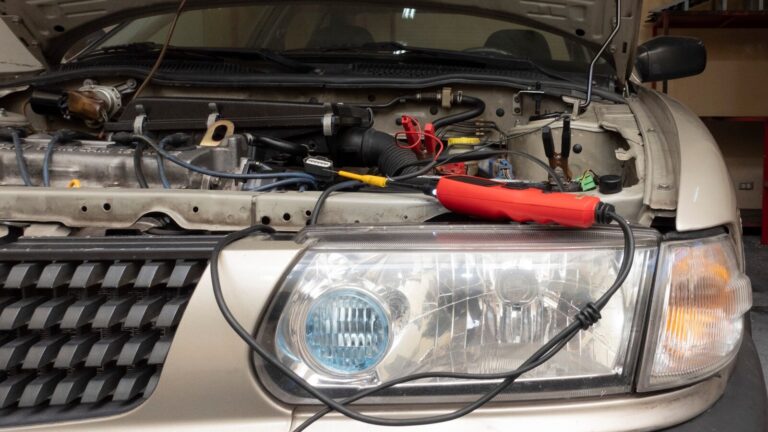
Modern vehicles store learned settings — radio presets, window positions, climate control settings, and adaptive transmission parameters — in volatile memory that is cleared when the battery is disconnected. A memory saver — a device plugged into the OBD2 port or cigarette lighter that maintains minimal power to the vehicle’s electronics during battery swap — preserves these settings. On some vehicles, clearing the memory has no significant consequences. On others (particularly European vehicles with complex adaptive systems), memory clearing can produce a temporary relearn period of rough idling and transmission shift behavior. Check your vehicle-specific forums before deciding whether a memory saver is worth the effort.